Designing Mining Operations
You’ve probably wondered at times what mining design is and what we actually do. In the following text, we provide a brief overview of the tasks and goals achieved through mining design and the tasks that design encompasses
What is Designing?
Planning and designing mining operations involve gathering all necessary mining, geological, geotechnical, geochemical, economic, and other data about a deposit that will be exploited, all in accordance with legal regulations. The main task of designing involves researching optimal parameters for conditions in a given deposit, with the aim of achieving optimal exploitation, both in terms of extraction costs and utilization of the deposit. The principles to be followed in designing are rationality, safety, and protection, to efficiently exploit the mineral deposit.
From Exploration to Exploitation and Closure
With a vision of how mining operations will develop from the first exploration borehole to the first cut in opening the deposit, a schedule can be prepared from initial mine development to exploitation and the finished product. Preparing a project for the development of mining operations involves three main items: 1. the mineral deposit, 2. designing mining operations, and 3. infrastructure. The project starts from within and is designed outward. The mineral deposit is the basis for designing mining operations (method of obtaining the mineral, production capacity, etc.). To ensure the designed mining operation functions fully, mining infrastructure (mining facilities and equipment, transportation means, etc.) needs to be adapted. These key elements must complement each other for the mining operation to be successful, efficient, and profitable.
1. Mineral Deposit Exploration
work (Picture 1) in the mineral deposit determines the quantities of mineral reserves that can be exploited. It is crucial to confirm the quality of the mineral, determined by laboratory tests and analyses.
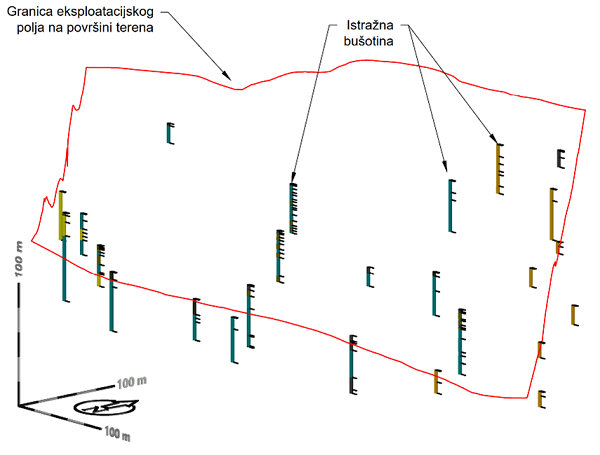
Picture 1: Presentation of exploration boreholes and deposit model
Since deposits can be exploited using different methods, the goal of designing mining operations is to determine the optimal method. To determine the most favorable way to open a deposit, it is important to know the distribution of mineral resources within the deposit, which affects the location where mining operations begin (Picture 2).
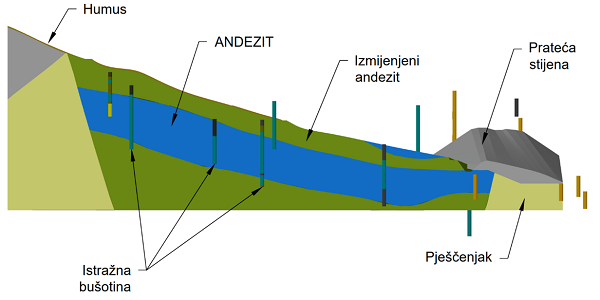
Picture 2: Presentation of exploration boreholes and deposit model
2. Designing Mining Operations
Initial efforts in design take into account geological and geomechanical aspects, including the geometry of the deposit, structural compositions, tectonics, etc. All of these determine the optimal contour of the final state of the mining operation. In design, it is crucial to determine the most favorable method of opening and development of the deposit, which depends on the type of mineral resource being exploited and its properties. For the optimal contour, the following design parameters need to be determined (applicable to surface mining), which define the geometry of the excavation (Picture 3):
- maximum bench height (he),
- minimum bench width (B),
- bench slope angle (αe),
- final slope angle (αz).

Picture 3: Cross-section of the final mining operations countour
The optimal final contour of mining operations (Picture 4) must ensure long-term stability and be safe for both workers and equipment on the site. It also needs to ensure long-term stability during the reclamation process of the mining site.
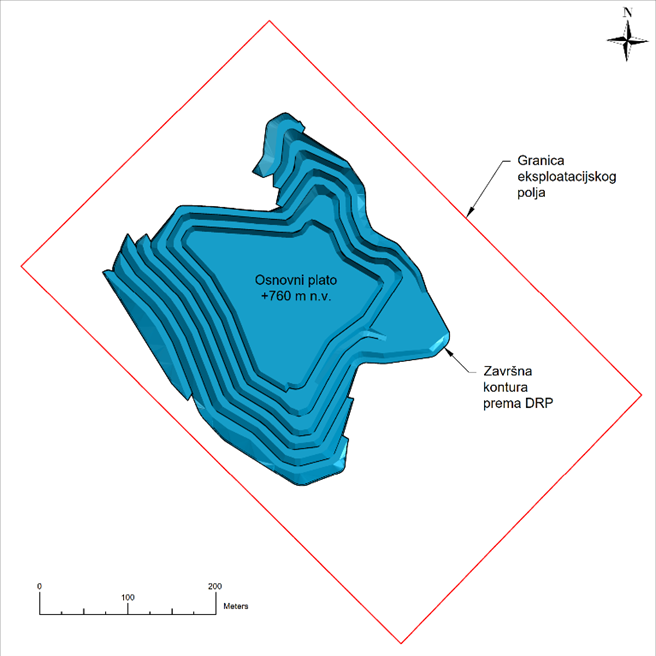
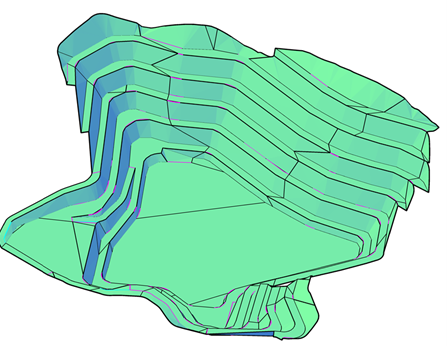
Picture 4: Presentation of the the final mining countour
3. Infrastructure
Infrastructure is an integral part of any mining operation. Mining facilities, necessary equipment, and transportation vehicles need to be adapted to the method of exploiting the future deposit. Each component must be analyzed and designed to best meet the requirements of mineral extraction. All facilities, equipment, and machinery must meet the necessary capacities.
A crucial aspect included in the design of mining operations is the economic viability of the project itself. The economic justification of mineral extraction depends on the quantities of reserves identified in a deposit and the costs of extraction and processing.
4. Closure – Remediation and Repurposing
Just like everything else, every mining operation has its lifespan. The existence of a mine depends on the quantities of mineral resources being exploited and the annual extraction capacity. Alongside extraction, mine remediation must be carried out. Remediation can be technical (achieving the designed final contours) or biological (involving the greening of bench levels and slopes). Today, it is often planned during the design phase to repurpose closed mines as a form of remediation. Depending on the type of mineral resource that was exploited, closed mines can be repurposed into highly attractive adrenaline parks, sports and recreational centers, open-air concert stages (Picture 5), and similar venues.
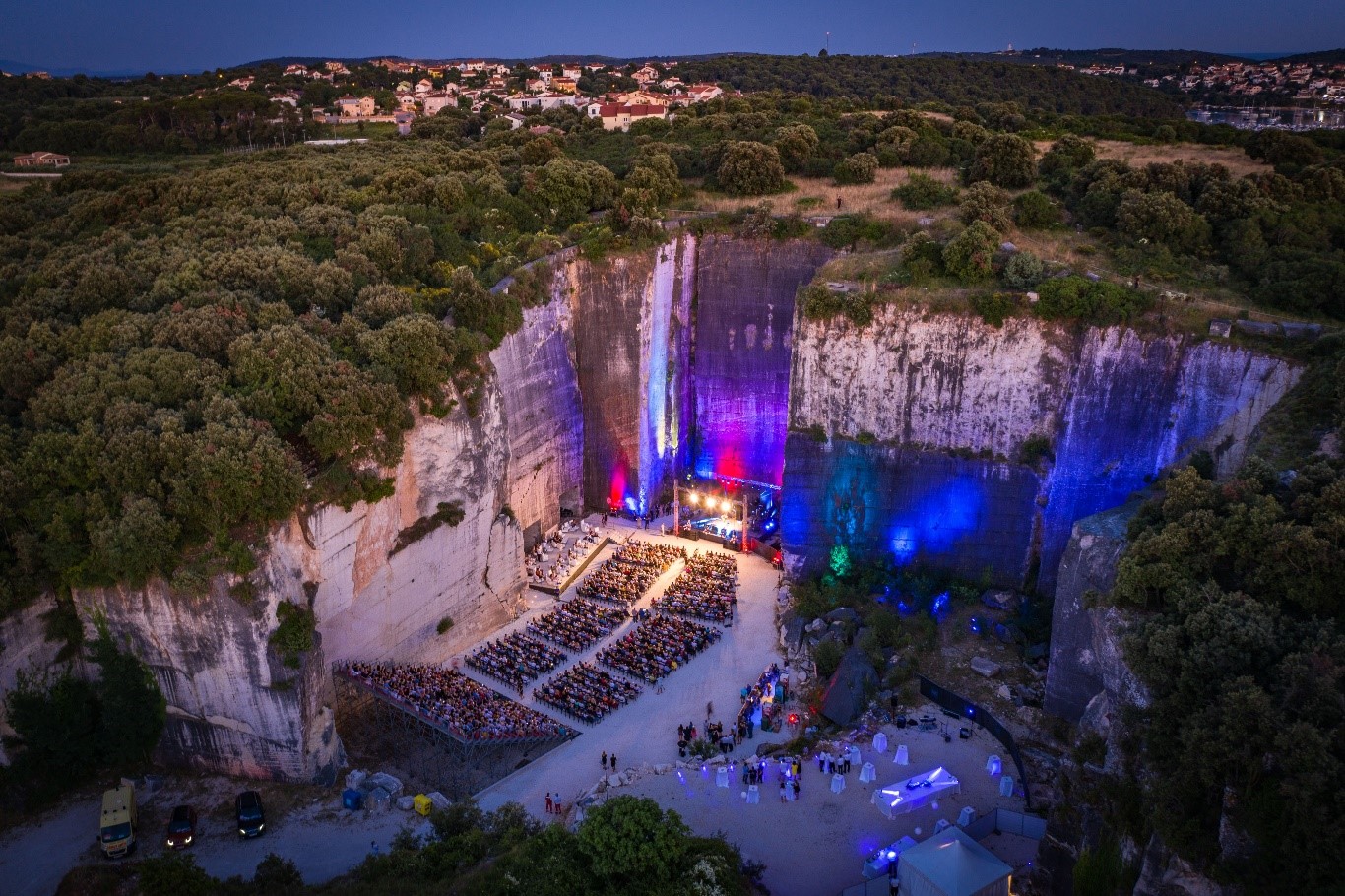
Picture 5: Vinkuran quarry (source: www.grazia.hr)
- Posted by Rudar projekt
- On 22nd rujan 2021
- 0 Comment