Impacts of Blasting on the Environment
Blasting is the most commonly used technological process in mining, where explosives are used to extract valuable mineral resources, especially in open-pit mines. There are some negative effects associated with blasting that can impact the environment.
Effects of Blasting
Noise
The occurrence of noise is an unavoidable effect accompanying blasting and mining activities. During blasting, noise occurs only for a fraction of a second, at the moment of detonation. The level of noise can be calculated and depends on the distance of an object from the blast site and the quantity of explosives initiated simultaneously. The intensity of noise decreases with distance from the sound source (approximately 6 dB for every 1 meter).
Seismic Activity
Initiating a blast field consumes the energy of the explosive, creating a seismic (earthquake) wave. The epicenter of wave propagation is the blast site, from which waves radiate radially into the surroundings (Figure 1). The intensity of the resulting seismic activity depends on the quantity and type of explosive charge, the distance from the blast site, and the medium through which the waves propagate (composition of soil/rock). The permissible ground oscillation rates (mm/s) are defined by threshold values depending on frequencies, classifying surrounding structures into categories (commercial buildings, residential buildings, and protected structures).
Air Blast Wave
Due to the rapid increase in gas pressure during explosive detonation, an air blast wave occurs (Picture 1). The intensity of the air blast wave depends on the quantity and type of explosive used, the method of initiating the blast field, the distance from the explosion center, the shape and landscape of the terrain, weather conditions at the time of blasting, stemming, the length and quality of the blast hole plug, the spacing between blast holes, and the method of deploying and quality of the decelerator. The pressure of the air blast wave is proportional to the quantity of explosive charge detonated in a specific time, and inversely proportional to the distance from the explosion site.
Ejection of Detonated Material
During each blasting operation, pieces of rock mass are ejected to a certain distance from the blast site (Picture 1). The geometry of the blasting (stemming, spacing between boreholes, and rows of boreholes) and the quantity of explosives primarily influence the distance of ejection.
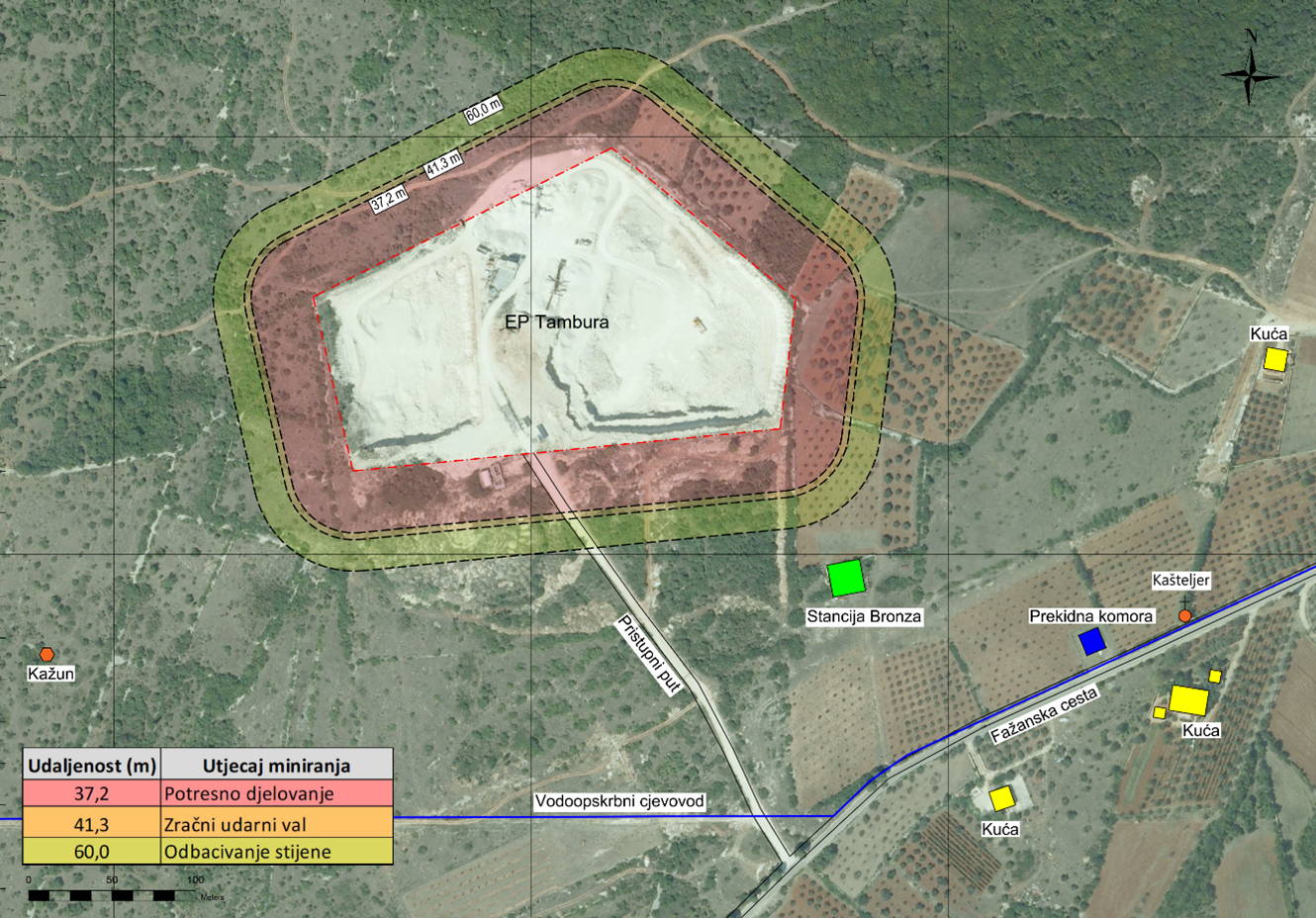
Picture 1: The mining zone area
Dust
The occurrence of dust due to blasting is of short but intense duration. Depending on weather conditions, dust or dust particles will settle at the location where they originated. Larger particles settle first at shorter distances, followed by smaller particles settling at greater distances. Weather conditions such as fog, rain, wind, etc., are important factors influencing the spread of dust into the environment. During the summer months, the occurrence and spread of dust are significantly higher compared to periods of rainy and humid weather (Picture 2).
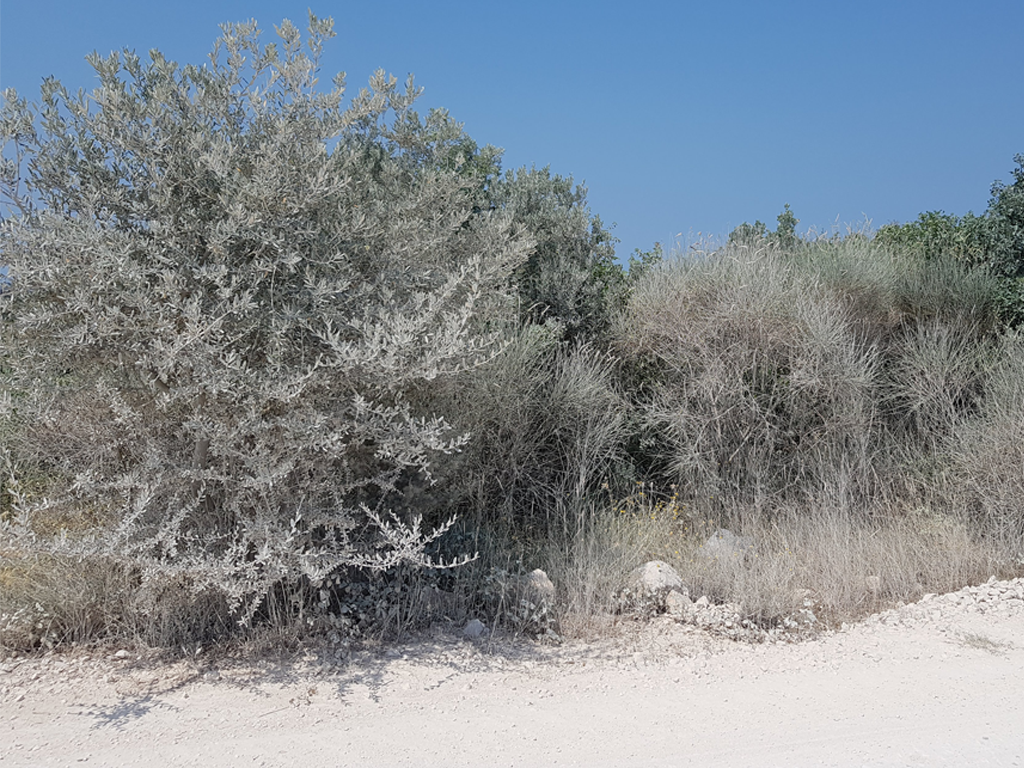
Picture 2: Dust settling on vegetation
What environmental impact does blasting have?
All effects resulting from blasting have a negative impact on the environment. Improper blasting can have very unfavorable consequences. For example, initiating excessive amounts of explosives can cause high-speed ground oscillations that may result in damage to surrounding structures, such as the appearance of cracks in facades or interior walls. The occurrence of a high-intensity air blast can damage glass on buildings. Material ejection at the surface mine can cause significant damage to machinery and pose a risk to people present at the site.
How to mitigate negative impacts?
To reduce harmful effects, it is essential to properly select blasting parameters to determine the area where the adverse effects of blasting are most pronounced. To execute blasting with minimal environmental impact, it is necessary to designate a safe area from rock ejection, seismic effects of explosives, and safe areas due to the action of the air blast. The impacts of blasting should be measured during the first blasting near the closest structures, and based on the results, blasting parameters should be adjusted. Additionally, blasting should be carried out during favorable weather conditions, which also contribute to minimizing negative environmental impacts. Most importantly, blasting should be conducted in accordance with mining industry standards and legal regulations.
- Posted by Rudar projekt
- On 22nd rujan 2021
- 0 Comment